When the Pacific Warms, India Must Learn from the Desert
The question is no longer whether India needs these lessons, but whether it is prepared to adopt them at the scale and speed that climate change demands.
The Hon’ble President of India, in her capacity as the Visitor of the University of Delhi, has granted a second term to the incumbent Vice Chancellor, Prof. Yogesh Singh.




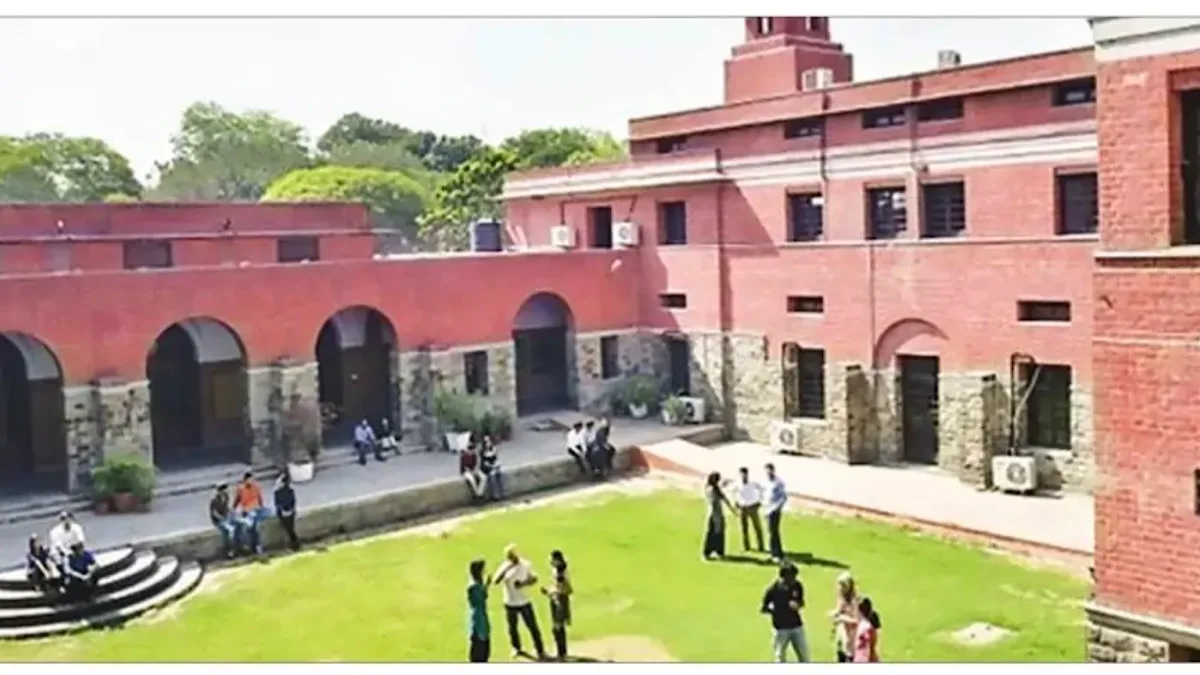
Photo:SNS
The Hon’ble President of India, in her capacity as the Visitor of the University of Delhi, has granted a second term to the incumbent Vice Chancellor, Prof. Yogesh Singh. This is historically significant as Statute 11-F (4) of the University was modified in 2023, paving the way for a consecutive term for its Vice Chancellor; institutionally, this marks the first practical implementation of the amended statute. Before this amendment, an incumbent V.C. could not immediately secure a reappointment.
Prof. Singh joined the University on October 8, 2021, as its 23rd Vice Chancellor. Accordingly, his first term was set to conclude on October 8, 2026, but the Government of India has notified his reappointment well in advance. This move by the government is significant in many ways, most notably as an approval of, and reward for, the functioning of Prof. Singh as an academic leader with proven vision and experience. Before joining the University of Delhi, Prof. Singh had served several other universities as Director or Vice Chancellor, including Netaji Subhas University of Technology, Delhi; Maharaja Sayajirao University, Vadodara; and Delhi Technological University, Delhi.
Advertisement
Fortunately, Prof. Singh arrived at D.U. at a time when the University was planning to celebrate its centenary through year-long programmes. This could have been a challenge for any newcomer, but Prof. Singh turned it into a mega opportunity by organising numerous academic and cultural events, bringing out key publications, and, above all, inspiring the university to work together as a cohesive team. That was also the time when promotions for the teaching faculty, after a drought of around a decade, had already been initiated as per the UGC Regulations 2018 by the interim Vice Chancellor, Prof. P.C. Joshi.
Advertisement
However, these processes needed to be further streamlined to become a default institutional practice. The University still relied majorly on the shoulders of temporary (ad-hoc and guest) faculty. The first major step was taken by Prof. Singh in creating a working plan to end the menace of ad-hocism in the University. Within a span of two to three years, recruitments were systematically conducted for more than 5,000+ teaching p o sitions, which is a commendable accomplishment for any university in the country, and likely globally.
However, the biggest feat was the smooth implementation of the NEP 2020 at the University of Delhi, a pioneering task in the country and a prime example of leading from the front. In 2022, the Undergraduate Curriculum Framework-2022 (UG CF) was implemented, followed by an NEP-aligned overhauling of P G courses through the PGCF. Infrastructure challenges were also taken head-on with the planning and implementation of many projects across the university, including a college in Dwarka named after Veer Savarkar and another named after Sushma Swaraj.
Many infrastructure projects have been planned, and some are currently at various stages of implementation. Another term will provide sufficient time to complete them and re-evaluate them where necessary. These were likely the driving factors behind the Central Government’s decision to maintain administrative continuity for a massive institution like the University of Delhi. The University of Delhi attracts national attention due to its enormous size, catering to lakhs of students, its geographical advantage, its historicity, and its academic rigour and quality.
The presence of its constituent colleges, which consistently rank as the top institutions in the country, is also a significant point of pride. This scale, combined with its inherent plurality and diversity, makes it one of the most talked-about universities in the nation. As the Prime Minister has provided a vision to achieve Viksit Bharat @ 2047, higher education institutions, and particularly the University of Delhi, must play a crucial role in that mission. For that reason, the University must maintain a clear vision regarding its contribution to the country’s growth and the fulfilment of that vision. In the age of digital transformation, a clear framework is also required to respond to the needs and expectations of technology and artificial intelligence.
These crucial years can be utilised for infrastructural and technological preparedness, as well as for forging strategic partnerships. Moving beyond the celebrated colleges to actively support less-advantaged constituent colleges could also be a top priority. Prof. Singh has a long runway until 2031 for the planning and execution of robust ideas. As a known visionary with the boldness to take initiatives, his rich experience in academic leadership will certainly provide him with an edge to contribute meaningfully in a big way.
If the first term of Prof. Singh was majorly devoted to recruitment , promotions, and the baseline implementation of the NEP, his second term should focus more on fostering a robust research environment, decentralising governance, and, above all, strengthening academic, administrative, and financial structures. The Government of Bharat, the teaching fraternity, and the country’s youth are looking toward the university with great expectations.
The government communicated its decision regarding Prof. Singh’s continuation without wasting a single day out of the mandatory ‘last-three-months restriction’. Had this not been done, Prof. Singh would have been restricted to routine, non-policy administrative work until the official end of his first term. Now, however, the onus is on Prof. Singh to take on this larger responsibility of leading the University until October 2031 with a grander vision and deeper dedication. It is certainly a colossal prospect for Prof. Singh personally to lead this historic institution to pioneering heights, and for the University institutionally to establish itself as the university of 21st-century Bharat.
(The writer teaches at the University of Delhi and is the Jt. Director of the Centre for Hindu Studies at the University)
Advertisement